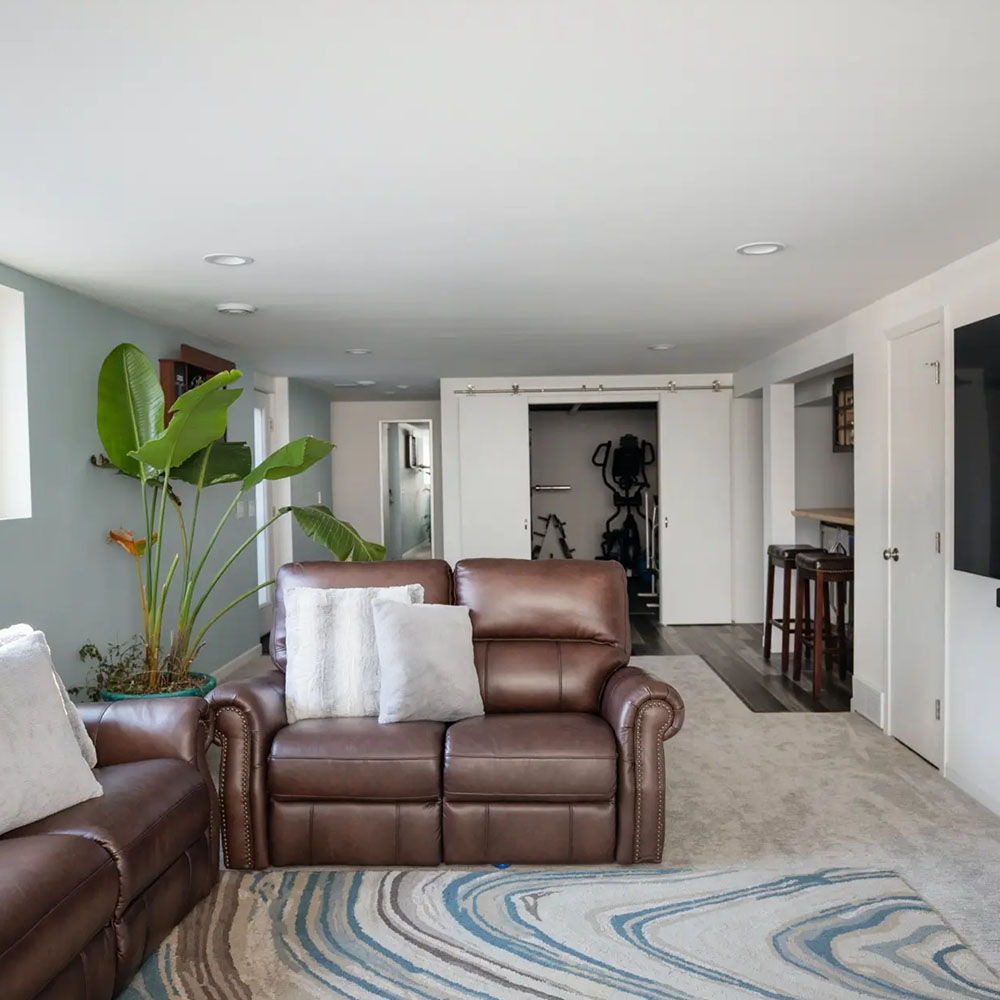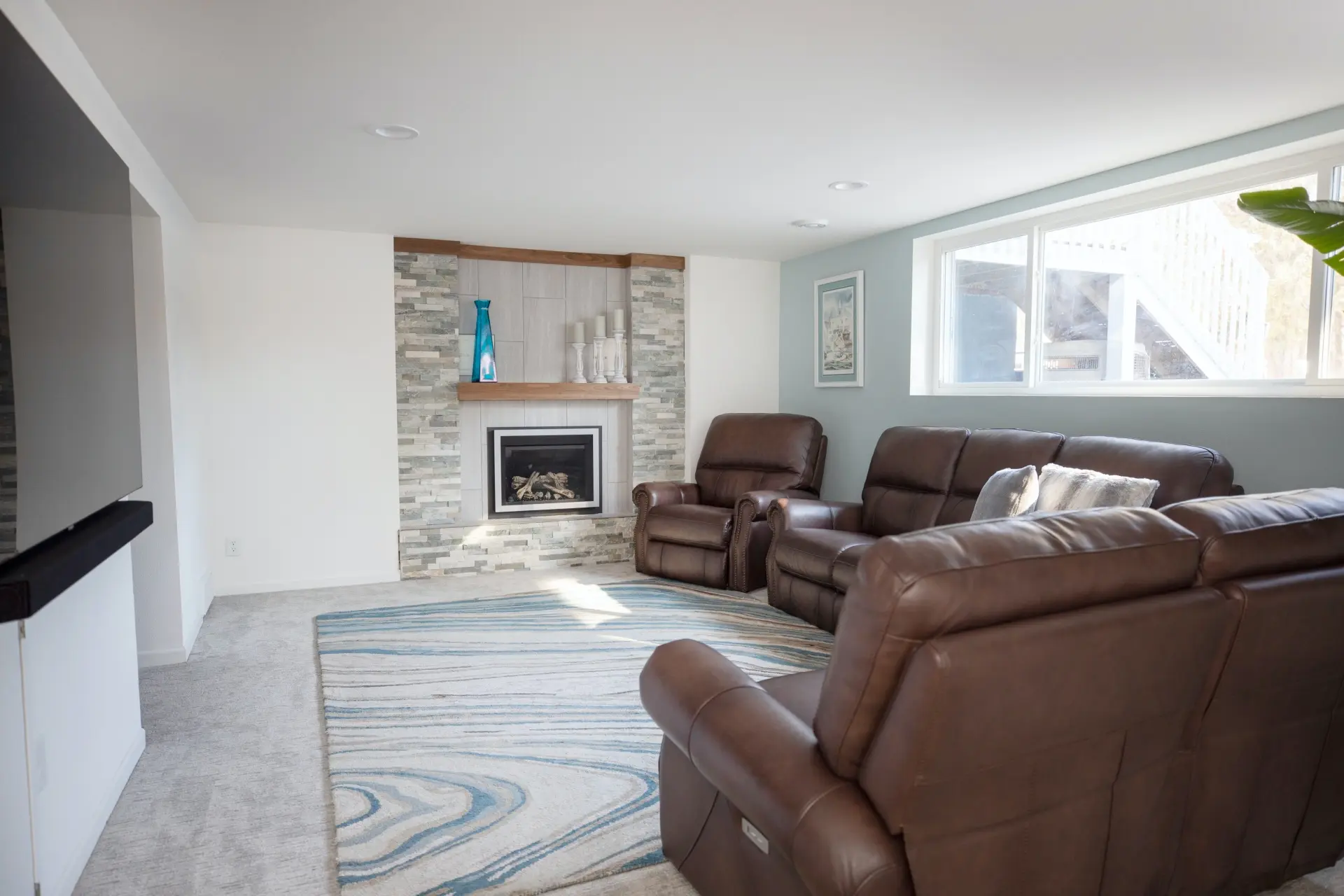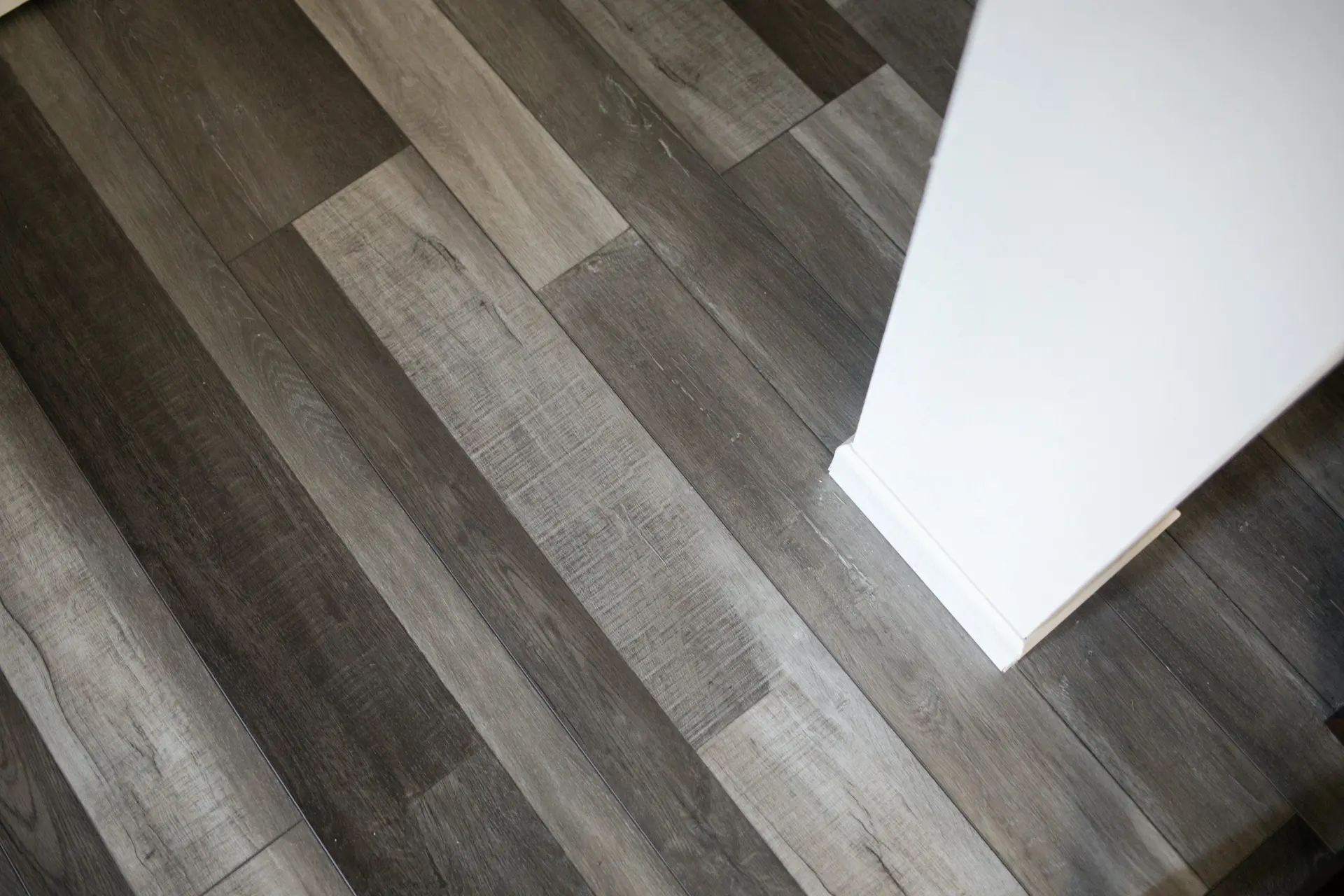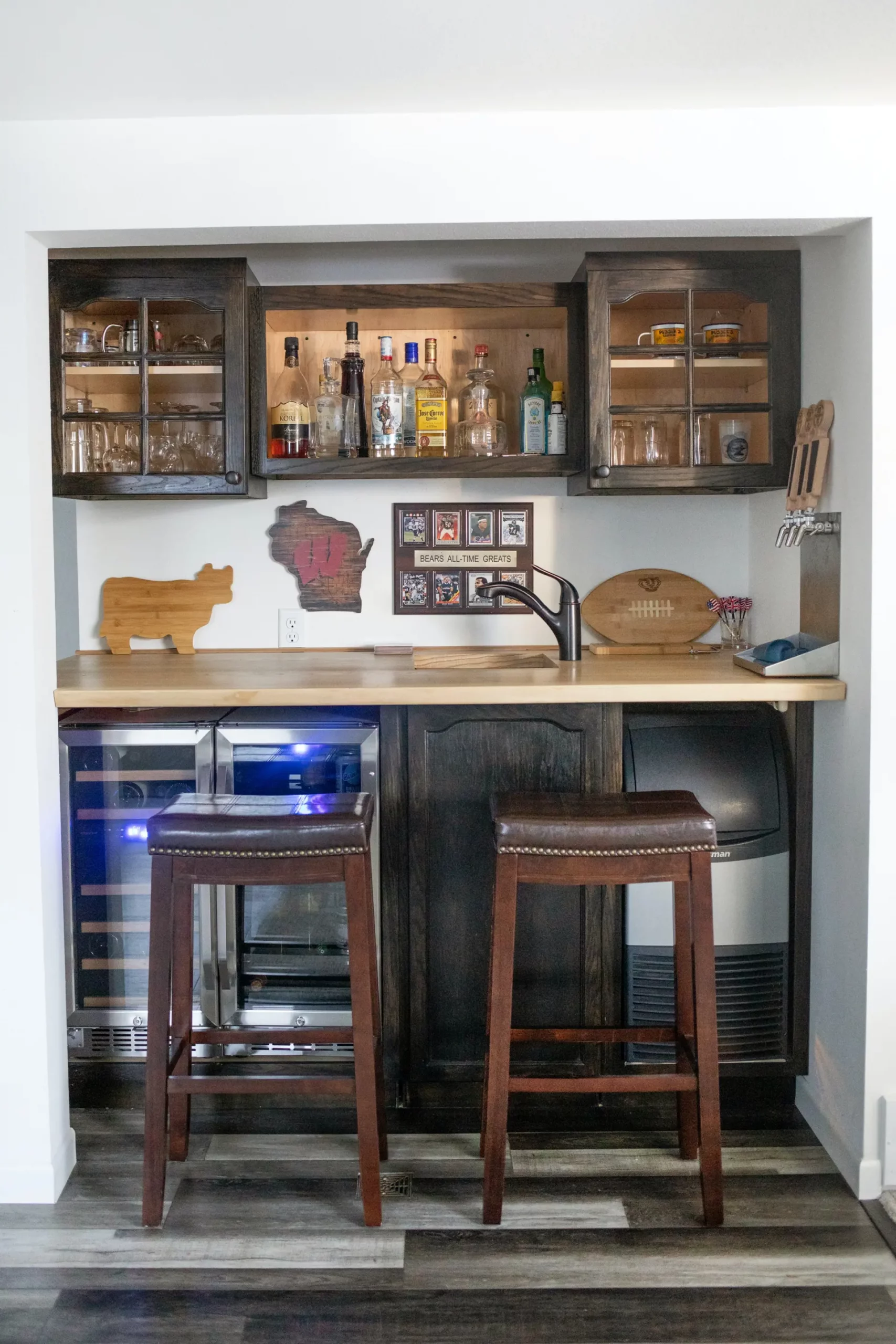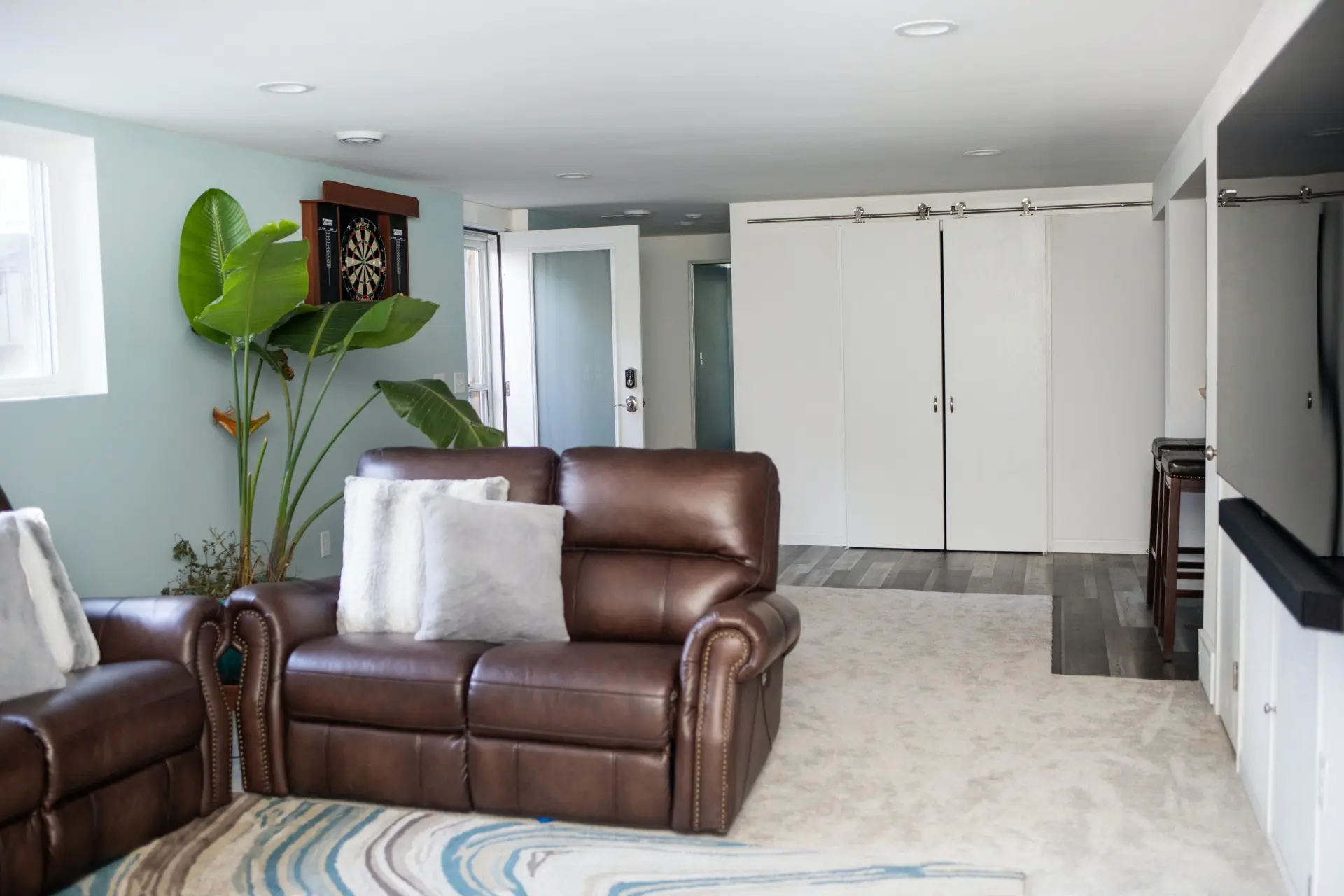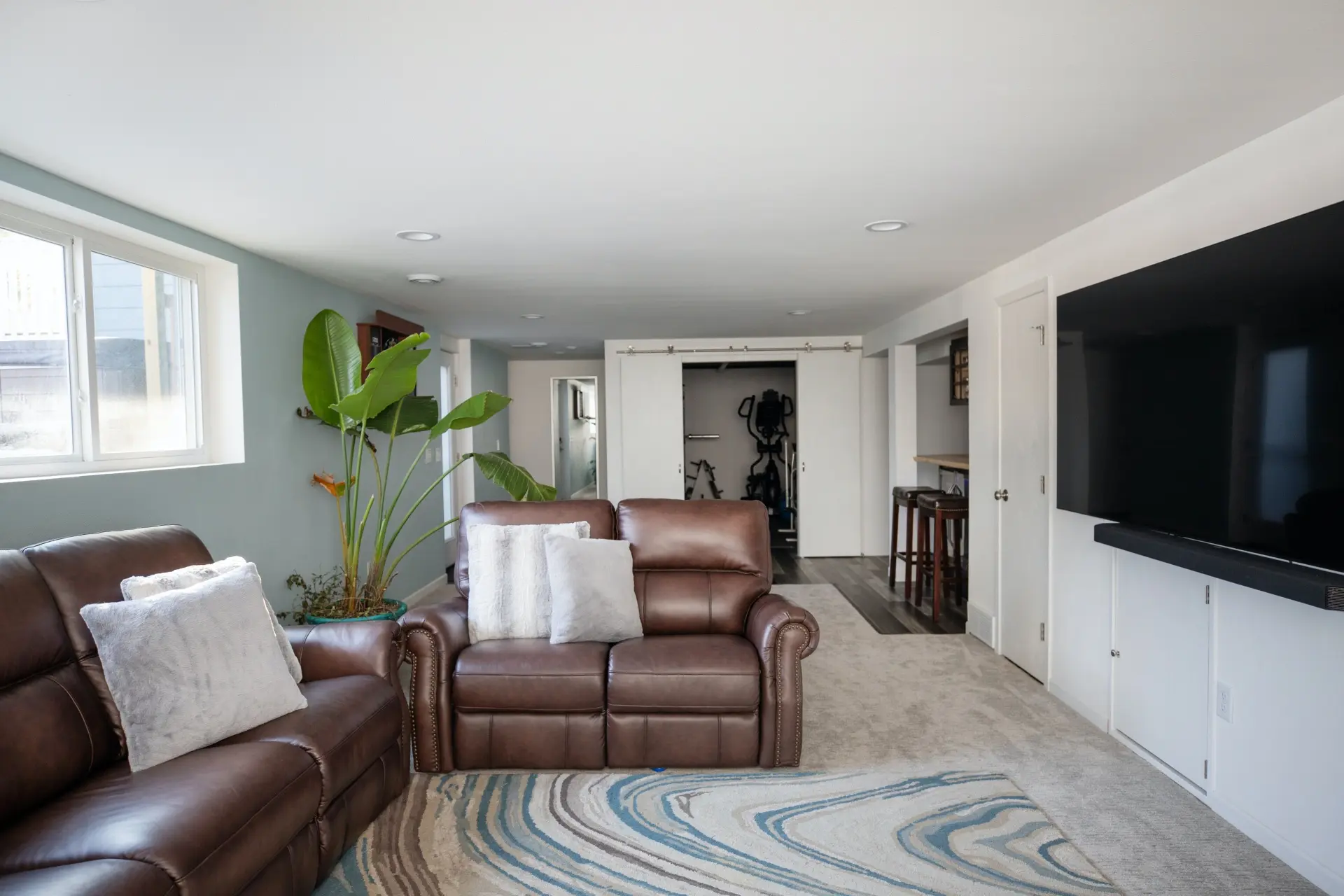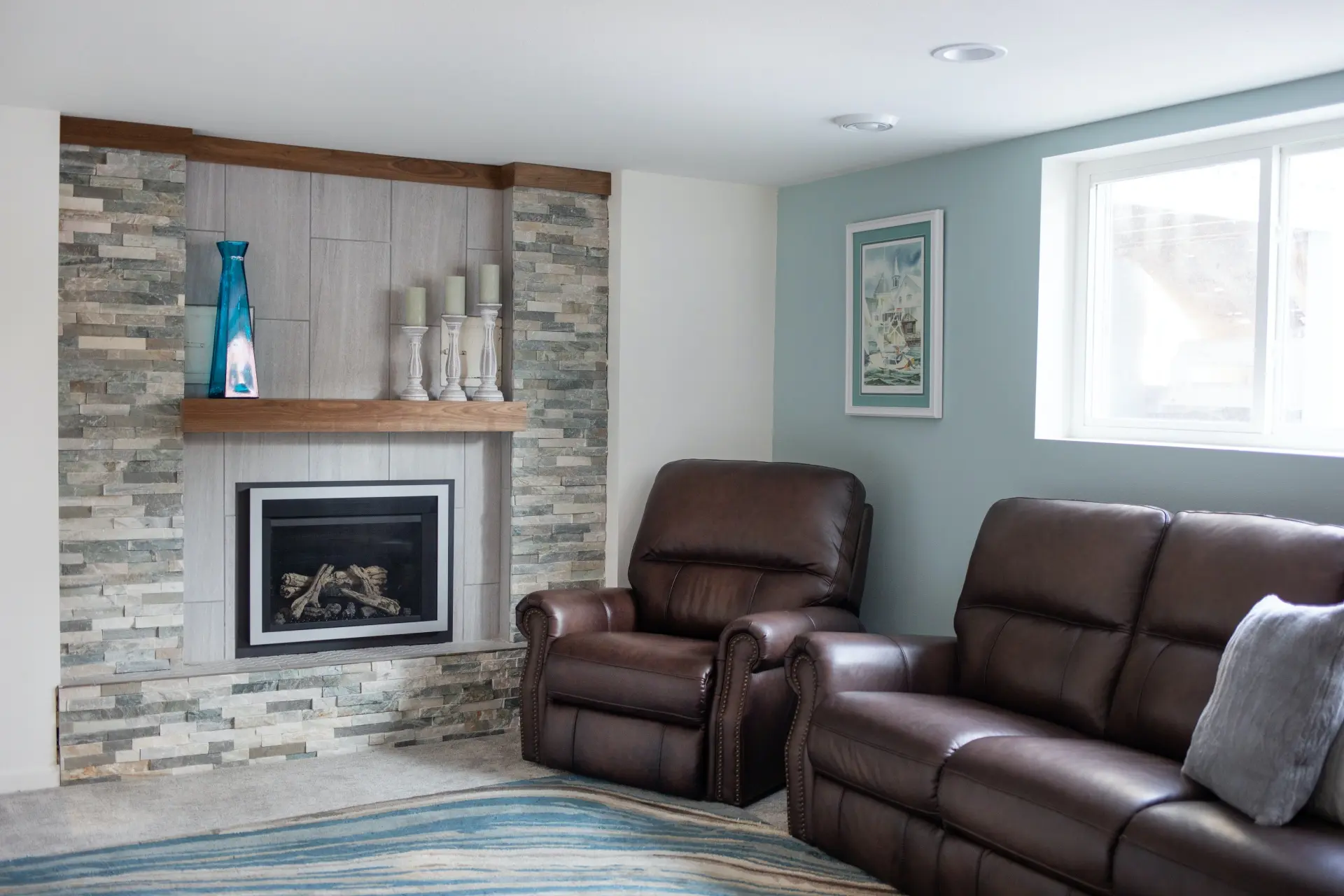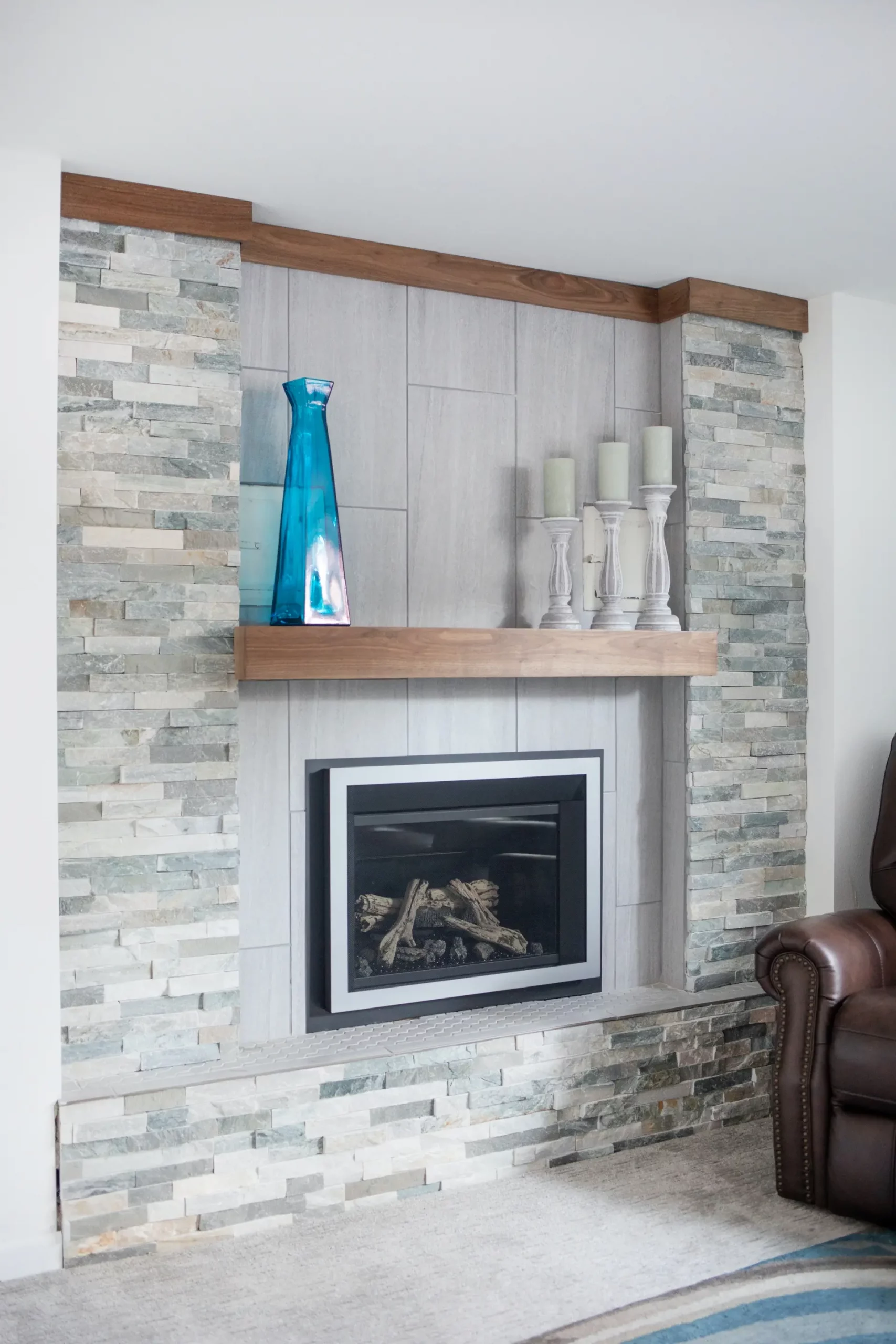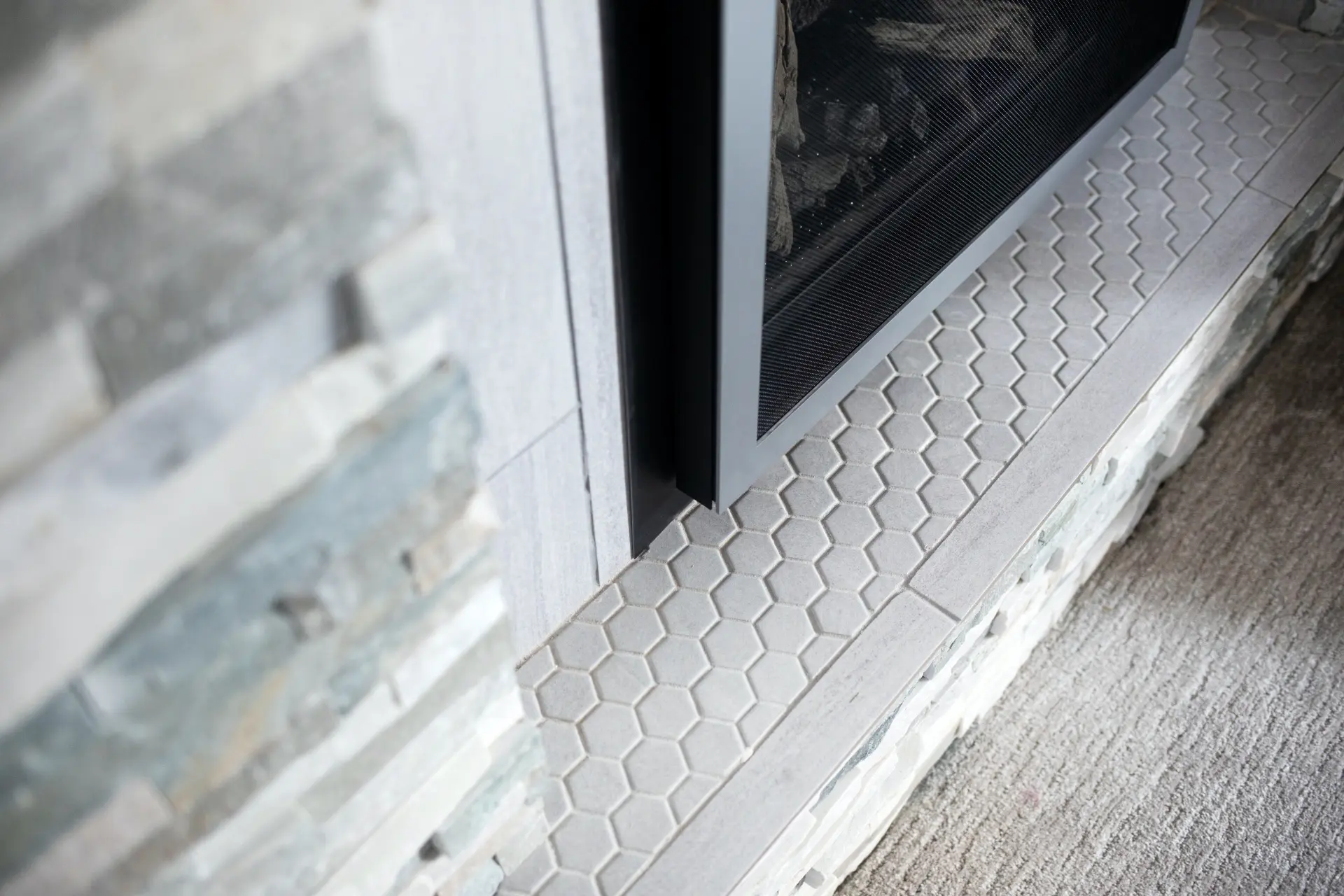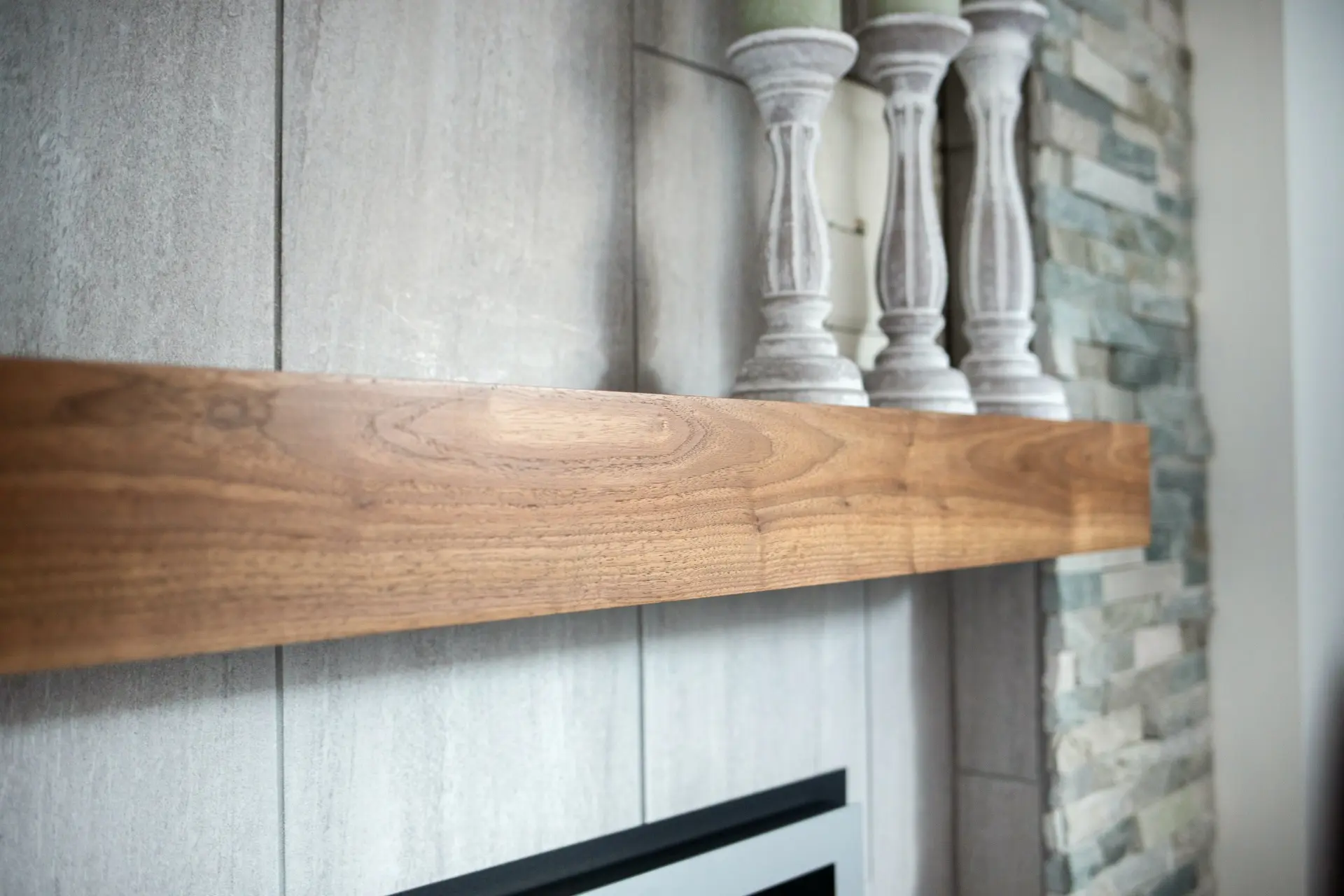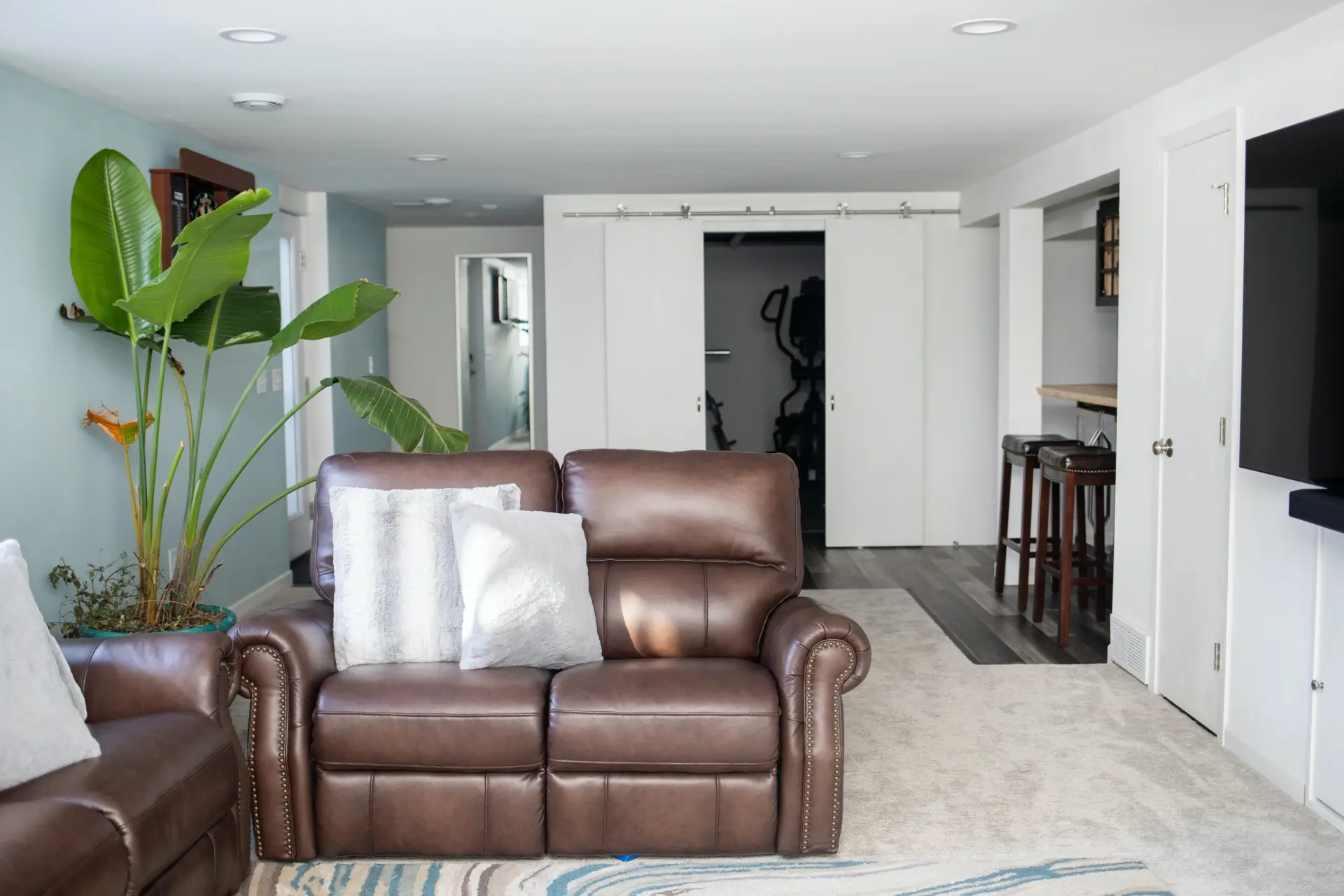
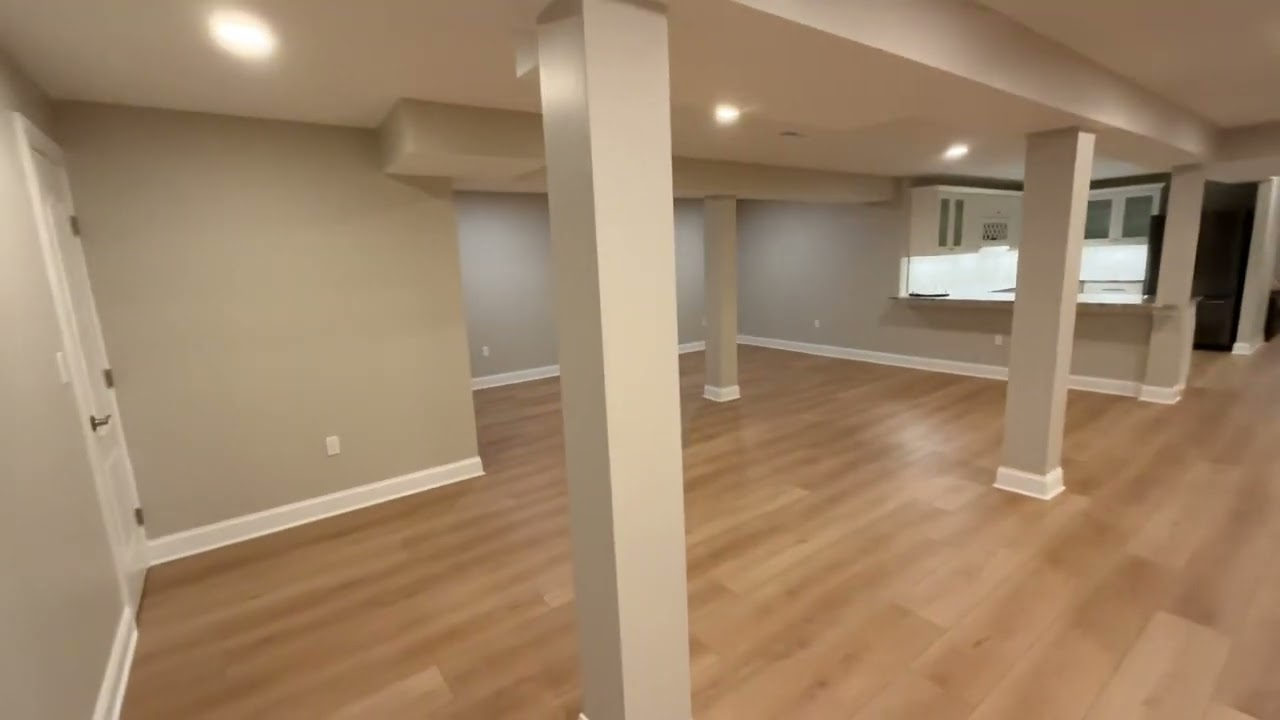
Madison homes, particularly those built between the 1950s and 1990s, often have unfinished basements that represent significant untapped living space. A properly finished basement adds functional square footage, increases your home’s value, and solves real problems in how you use your home.
AF Construction has finished and remodeled basements throughout the Madison area. We understand the specific challenges Madison basements present: older concrete block foundations, moisture management in Wisconsin’s wet springs, Wisconsin Uniform Dwelling Code egress requirements, and the permit process through the City of Madison Building Inspection Division.
Call 608-497-1194 to schedule a free basement consultation.
Basement Finishing vs. Basement Remodeling: What’s the Difference?
Basement Finishing
A basement finish starts from a raw, unfinished space and creates livable, habitable square footage. This includes framing, insulation, drywall, flooring, lighting, and any needed electrical or plumbing work. Most Madison homeowners finishing a basement for the first time are doing a finish project.
Basement Remodeling
A basement remodel updates or reconfigures an existing finished basement. Changing the layout, adding a bathroom, creating a home office in what was a playroom, converting unfinished storage space into finished square footage. If you have a 1980s-finished basement that feels dated or dysfunctional, you’re looking at a remodel.
The Madison Basement: Specific Challenges
Moisture Management
Wisconsin’s spring thaw and wet summers create real moisture challenges for Madison basements, particularly in older homes with block foundations or without proper perimeter drainage. AF Construction assesses moisture conditions before any finishing work begins. Finishing over a moisture problem is one of the most common and costly mistakes in basement projects.
We’ll tell you what we find and what (if anything) needs to be addressed before finishing can proceed. Visible water intrusion, efflorescence (white mineral deposits on block walls), or a history of seasonal water in the basement all need to be evaluated and resolved before drywall goes up. That honesty upfront saves significant money later.
Wisconsin Egress Window Requirements
Wisconsin Uniform Dwelling Code (SPS 321.03) requires egress windows in every sleeping room, including bedrooms in finished basements. The specific requirements:
- Minimum net clear opening: 5.7 square feet (5.0 sq ft for grade-floor or below-grade openings)
- Minimum opening height: 24 inches
- Minimum opening width: 20 inches
- Maximum sill height: 44 inches above the finished floor
- Window well minimum: 9 square feet floor area where the window is below grade
- Operation: The window must be openable from the inside without keys, tools, or special knowledge
Adding egress capability to a basement that doesn’t currently have it involves excavation, foundation cutting, waterproofing, and proper window well installation. If your basement finish plan includes a bedroom, we’ll walk you through the egress requirement, what it involves, and what it costs. It’s not optional, but it’s manageable, and we handle this as part of standard basement bedroom additions.
City of Madison Permit Process
Basement finishing in Madison requires a building permit through the City of Madison Building Inspection Division. The permit process includes a plan review and inspections at rough framing, rough mechanical and electrical, and final stages. AF Construction manages the permit process as part of every project. Permit costs are line-itemized in the estimate so there are no surprises.
Low Ceilings and Ductwork
Many Madison homes, particularly 1950s-1970s ranch-style homes, have basements with HVAC ductwork, plumbing, and structural beams that compete for headroom. Designing a basement finish around these constraints is something we do on almost every project. We’ll show you what the finished ceiling height will be and how we’ll address any obstructions, including options like soffit construction around ductwork or relocating mechanical runs where it makes sense.
Older Foundation Considerations
Madison homes built before the 1970s often have block foundations rather than poured concrete. Block foundations have their own moisture and structural considerations, and finishing techniques (vapor barriers, insulation methods, framing approaches) differ from what’s appropriate for poured walls. We assess your specific foundation type and build accordingly.
What We Build in Madison Basements
- Family rooms and living spaces. The most common basement finish.
- Home offices. High demand post-2020. Requires attention to lighting, acoustic isolation, and electrical capacity for equipment.
- Guest bedrooms. Requires egress window compliance per Wisconsin SPS 321.03.
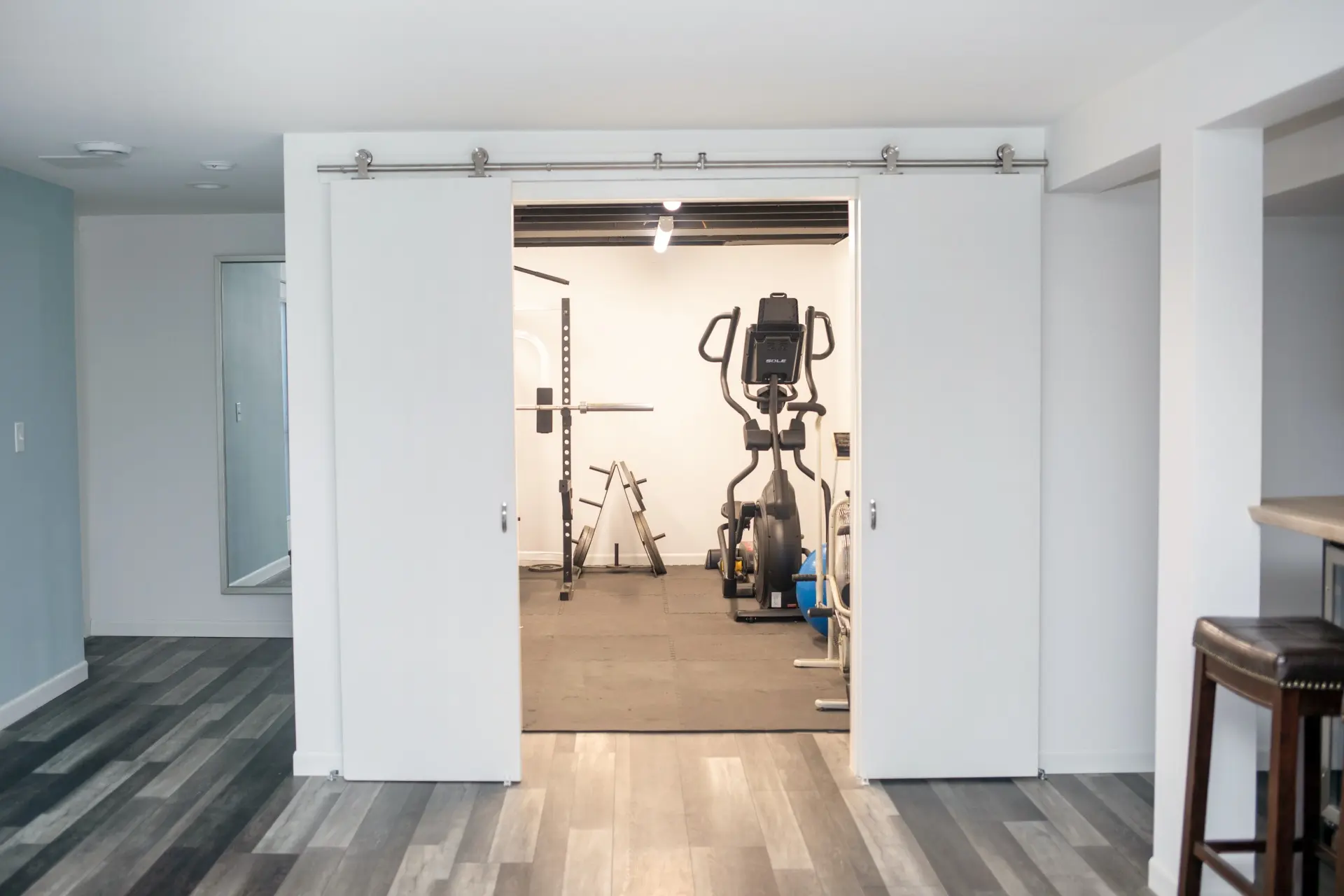
- Home gyms. Flooring selection (impact resistance), ceiling height, and electrical load considerations.
- Wet bars and entertainment spaces. Plumbing, ventilation, and electrical for entertaining infrastructure.
- Dedicated storage rooms and workshop spaces. Often paired with a finished living area.
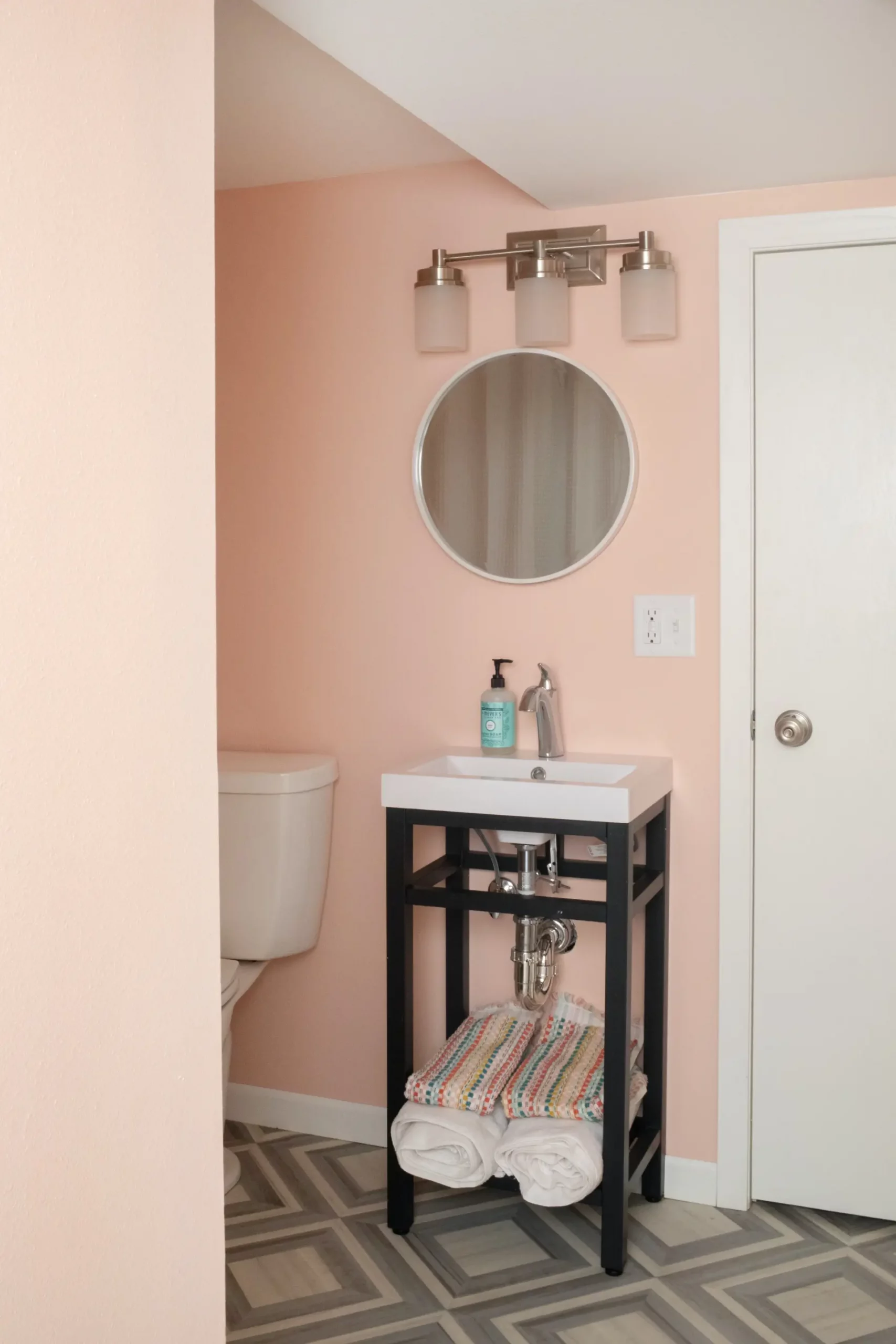
- Basement bathrooms. Rough plumbing work, sewage ejector pump if below the main sewer line, permit required.
- In-law suites or rental units. Combining bedroom, bathroom, and small kitchen spaces, with full code compliance.
What a Finished Basement Costs in Madison
A mid-range basement finish in Madison typically runs $35 to $60 per finished square foot. A 1,000 sq ft basement finish runs approximately $35,000 to $60,000. Higher-end finishes with full bathrooms, wet bars, and custom features run higher.
Cost drivers that move a project up or down within that range:
- Whether egress windows are needed (excavation and foundation cutting add cost)
- Whether moisture remediation is required before finishing
- Bathroom additions and the related plumbing work
- Custom features like built-in cabinetry, wet bars, or theater rooms
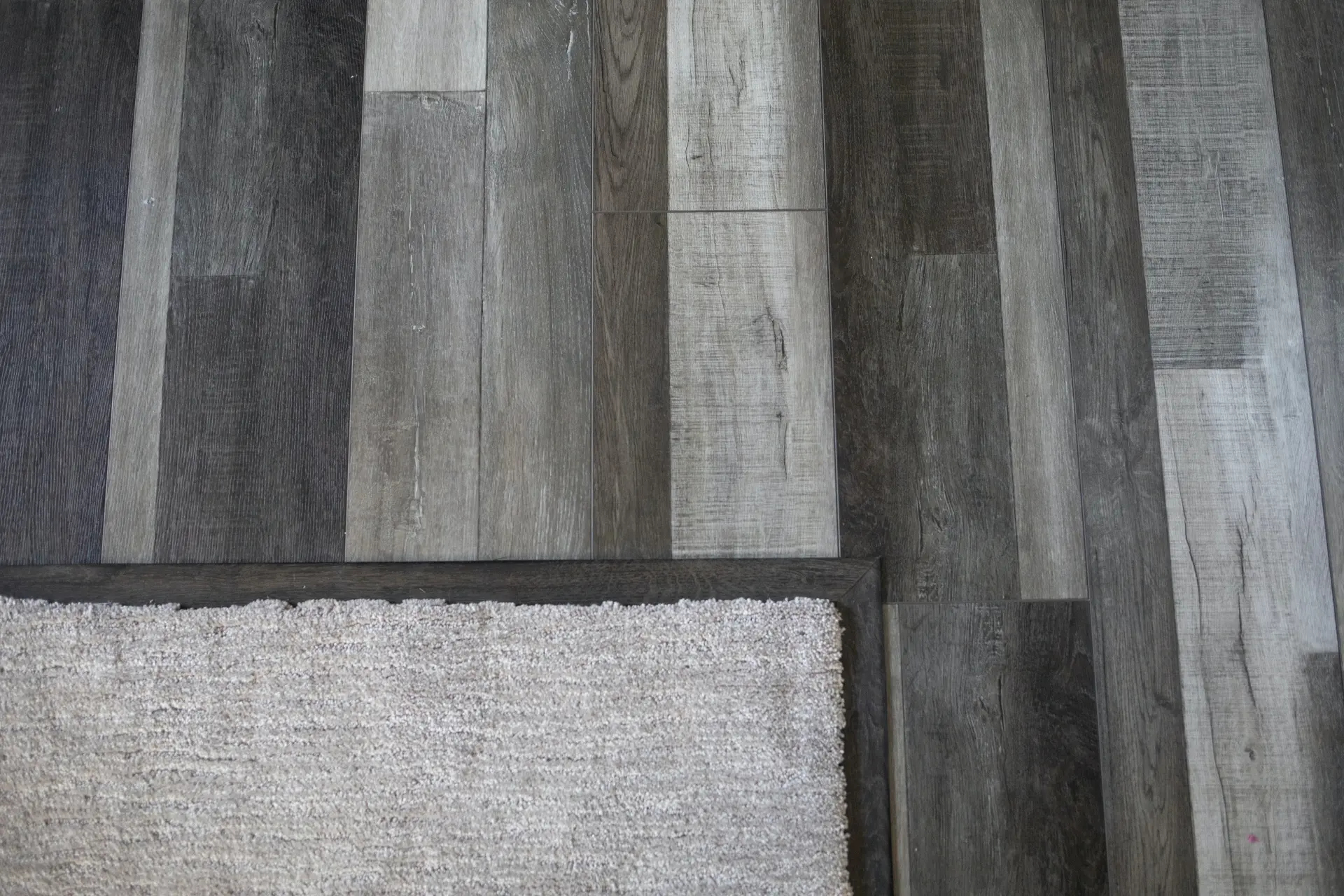
- Flooring selection (carpet vs. luxury vinyl plank vs. tile in wet areas)
- Electrical scope (lighting design, smart switches, theater wiring)
The line-item estimate we provide at the consultation breaks out every component so you understand exactly where the money goes.
What Sets AF Construction Apart for Madison Basements
- Owner-operator accountability. Adam Frydenlund personally oversees every project. The person you meet at the consultation is the person responsible for your basement.
- 400+ projects of experience. We’ve seen what can go wrong in Madison basements and we know how to address it.
- Detailed line-item estimates. Every cost broken out clearly. No vague lump sums.
- Honest moisture assessments. We’ll tell you if your basement isn’t ready to finish, even though that means recommending pre-work that doesn’t directly benefit us.
- Full permit management. We handle the City of Madison Building Inspection process from plan review through final inspection.
Free Consultation: Madison Basement Finishing
Phone: 608-497-1194 Email: info@afconstructionllc.com Address: 951 Kimball Ln Suite 112, Verona, WI 53593 Website: afconstructionllc.com
Frequently Asked Questions: Basement Finishing Madison WI
How long does a basement finish take in Madison?
A typical basement finish for a 1,000 to 1,200 sq ft space takes 6 to 10 weeks from permit approval to completion. Projects with bathrooms or complex mechanical work take longer. Egress window installation alone can add 1 to 2 weeks if foundation cutting is required. We provide a specific timeline at the estimate stage.
Do I need to address moisture before finishing my Madison basement?
We assess every basement for moisture before recommending a finish project. Visible water intrusion, efflorescence (white mineral deposits on block walls), or a history of seasonal water in the basement all need to be evaluated and resolved before finishing, not after. Finishing over a moisture problem traps the issue inside finished walls and creates a much more expensive remediation later.
What does Wisconsin require for egress windows in basement bedrooms?
Wisconsin Uniform Dwelling Code (SPS 321.03) requires every sleeping room, including basement bedrooms, to have an egress window with a minimum 5.7 sq ft net clear opening (5.0 sq ft for grade or below-grade openings), minimum 24 inch height, minimum 20 inch width, and a maximum sill height of 44 inches above the finished floor. Window wells (where required) need a minimum 9 sq ft floor area. The window must be openable from inside without tools or keys.
Can you add egress windows to an existing Madison basement?
Yes. Egress window installation involves excavating beside the foundation, cutting the foundation wall to create the opening, installing the window with proper waterproofing, and setting up a code-compliant window well. We’ve installed egress windows in dozens of Madison basements. It’s standard work for our crew.
Will a finished basement add value to my Madison home?
Generally yes. Finished basement square footage adds appraised value. The exact return varies by home, neighborhood, and quality of finish. A professionally finished basement in a Madison home in the $400,000 to $700,000 range typically returns 60 to 80 percent of project cost in added value, in addition to the quality-of-life improvement during ownership.
Can you add a bathroom to my Madison basement?
Yes. Basement bathroom additions are a common scope addition. Depending on your existing rough plumbing, this may involve a sewage ejector pump (if the basement is below the main sewer line) or connection to existing rough-in. We assess existing conditions and provide a clear cost for the bathroom addition as part of the overall estimate.
What’s the City of Madison permit process for basement finishing?
A building permit is required for basement finishing in Madison. The process involves submitting plans for review, paying permit fees, and scheduling inspections at rough framing, rough mechanical and electrical, and final completion. AF Construction manages the entire permit process. You don’t need to navigate the Building Inspection Division yourself.
Can my Madison basement support a home gym?
Most can. The questions are ceiling height (heavy weight equipment needs at least 7 feet, ideally 8), electrical capacity (treadmills, peloton, lighting all draw power), flooring (rubber or specialized gym flooring over a moisture barrier), and ventilation. We’ve built home gyms in Madison basements ranging from simple cardio rooms to full Olympic lifting setups.
How do I avoid surprise costs on a Madison basement project?
Two things: (1) work with a contractor who provides a detailed line-item estimate before any work begins, so you can see every cost component, and (2) make sure the moisture assessment happens before the estimate is finalized. Most basement project surprises are moisture issues discovered after demolition. AF Construction does both as standard practice.